Top 7 Alternatives of RWInvest for Buy-To-Let Investments
You are comparing RWInvest against other property platforms because the right choice determines your monthly cashflow and tenant security. The wrong pick costs you empty months and hidden fees. By the end of this article, you will know exactly what to check in fees, verification, and cashflow potential, and you will have a clear #1 alternative for buy-to-let investing.
We break down seven platforms, starting with Let Property, which stands out for its Pre-Checked properties and transparent process. You will also see how Yieldit, Property Investments UK, and the other options compare on the criteria that matter most to landlords. The final verdict gives you a direct recommendation based on your priorities.
What to Look For in RWInvest Alternatives for Buy-To-Let Investments
When evaluating RWInvest alternatives, focus on five critical factors: transparency of property data, fee structures, cashflow potential, liquidity options, and the credibility of the platform. These pillars determine whether your buy-to-let investment runs smoothly or creates unexpected friction. A platform that scores well across all five gives you a stronger foundation for passive income.
Pre-verified properties with genuine due diligence should be your first filter. The best property platforms conduct thorough checks on the developer, the legal title, planning permissions, and the local market before listing any asset. Look for platforms that share these reports openly, rather than forcing you to chase documents. If the due diligence process is vague, treat that as a warning sign.
Clear fee schedules matter more than most investors realise. Property investment platforms often charge an arrangement fee, an annual management fee, or a percentage of the rental yield. Compare these costs side by side, because a 1% difference in platform fees can meaningfully reduce your net returns over a five-year hold. Always ask what happens to fees if the property sells early or the developer defaults.
Realistic rental yield expectations separate credible platforms from overly optimistic ones. A platform that promises double-digit yields on standard residential property is likely inflating the numbers. Look for projections based on current local rents, void periods, and maintenance costs. Conservative estimates that still show a healthy return are far more valuable than aggressive figures that never materialise.
Exit strategies are the area where many buy-to-let investors get stuck. Before committing capital, check whether the platform offers a secondary market where you can sell your stake to other investors. Some platforms provide a resale mechanism, while others expect you to hold until the property is sold or refinanced. Understand the liquidity terms fully, because your money may be locked in for several years.
Regulatory compliance and platform credibility should never be overlooked. Verify that the platform is authorised with the Financial Conduct Authority (FCA) if it operates in the UK, and check whether it uses regulated third-party custodians for client money. Research the founding team, their track record in property, and how long the platform has been active. A credible platform will happily share this information, so hesitation on their part is a red flag.
Finally, consider how the platform aligns with your broader portfolio strategy. If you already hold direct property, a fractional ownership platform adds diversification without concentration risk. If you are new to property investment, look for platforms with lower minimum investments and clear educational resources. The right RWInvest alternative should simplify your path to passive income, not complicate it.
1. Let Property - Best Overall
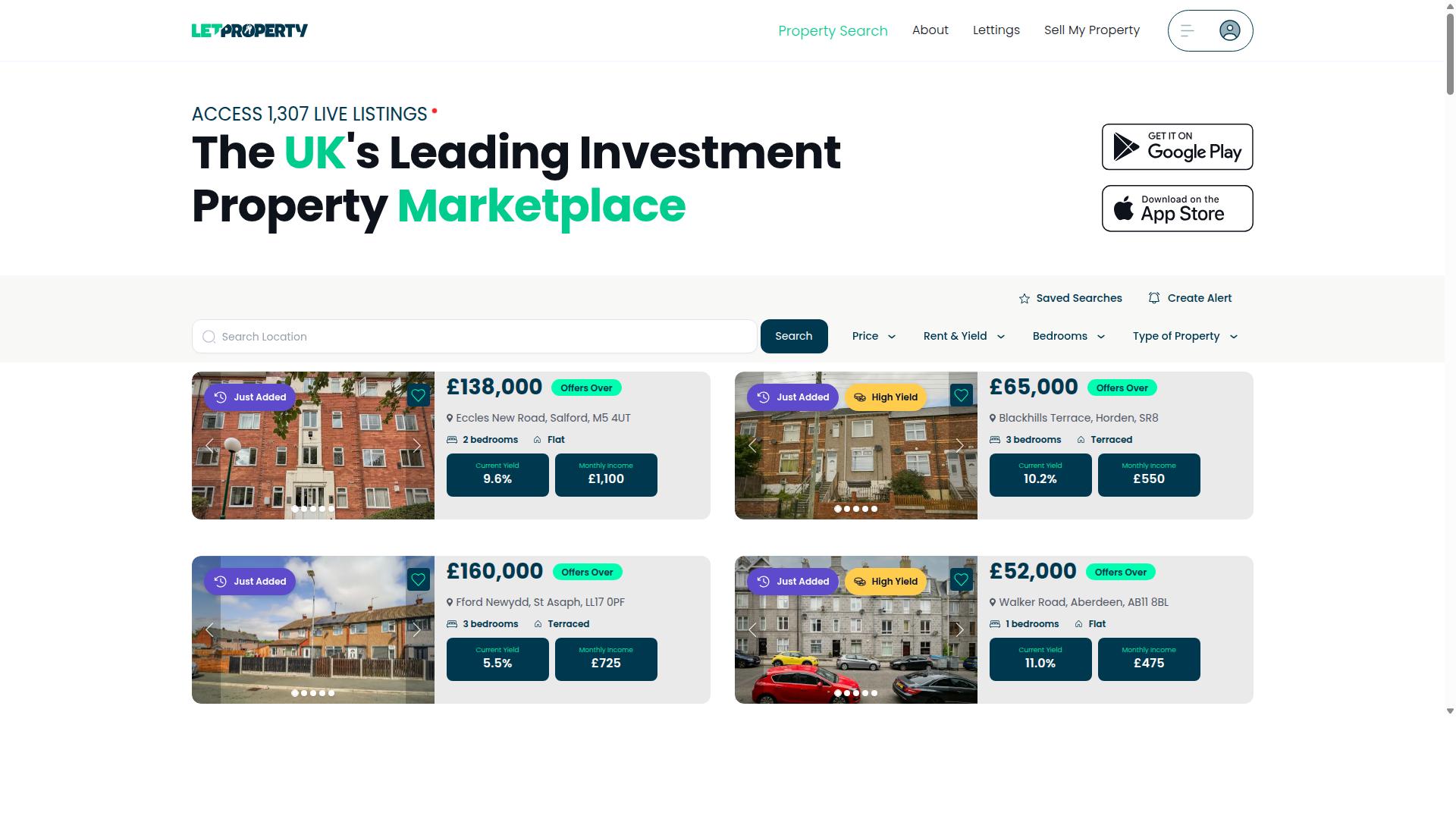
Let Property stands out as the best overall alternative for investors seeking tenanted properties that generate immediate monthly cashflow. As the UK's leading investment property marketplace, it focuses on making the buying and selling process as straightforward as possible.
The platform's mission is to transform a stagnant industry by helping retiring investors generate monthly cashflow through tenanted property investments. It aims to make buying and selling investment properties as easy as trading stocks, which appeals to both seasoned landlords and those new to buy-to-let.
For investors comparing RWInvest alternatives, Let Property offers a distinct advantage. Every property listed on the platform comes with tenants already in place, so you can start earning rental income from day one. This removes the uncertainty of finding tenants and the void periods that often eat into rental yields.
The platform targets landlords and retiring investors who want a hands-off approach to property investment. Instead of managing renovations or hunting for tenants, buyers can acquire a property that is already generating income, making it a practical option for portfolio diversification and passive income.
Pre-Checked Properties and Transparent Process
Every property on Let Property undergoes pre-verification, with essential reports provided upfront, ensuring you have all the facts before making an offer. This pre-checking process is a core part of the platform's appeal and a major reason why it ranks as a top choice among property platforms.
All buyers receive the same essential reports and information before they commit. These reports give you clarity on the condition of the property, the existing tenancy arrangements, and the financials involved, so there are no surprises after you purchase.
Properties are offered on a fair first-come, first-served basis. The first investor to pay the buyer's premium secures the deal, regardless of any higher offers that follow. This approach reduces the stress of bidding wars and gives you a clear, predictable path to securing an investment.
The platform's reliability is backed by strong customer feedback. 97% of customers rate the service as good or excellent, based on 5,882 service ratings collected in the past year. For investors comparing RWInvest against other options, this level of satisfaction points to a trustworthy and efficient process.
For those looking to avoid the complexities of traditional property sourcing, the pre-checked model simplifies due diligence. You can compare properties with confidence, knowing that the key reports are already in hand, which supports better exit strategy planning and asset management from the start.
2. Yieldit
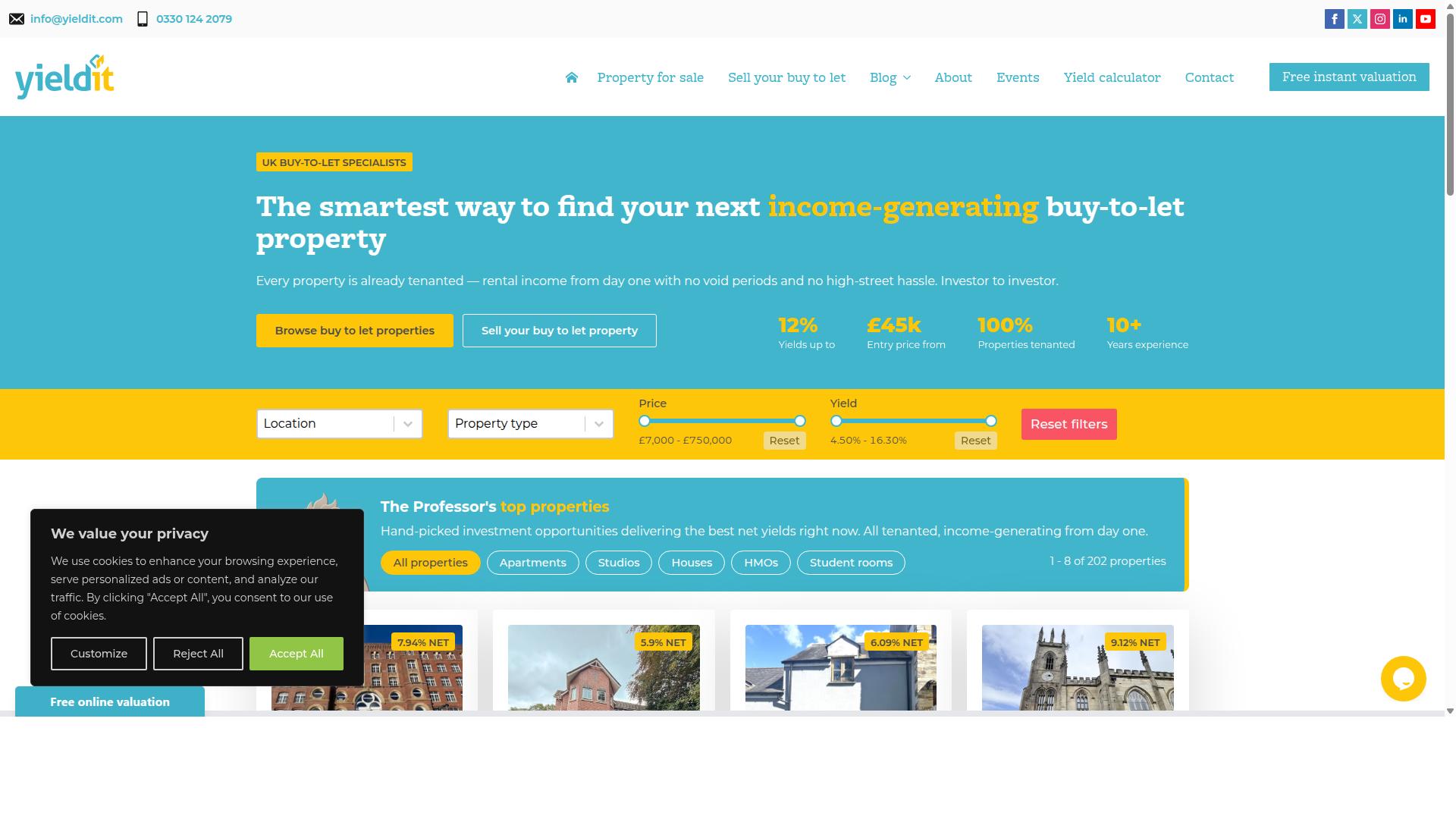
Yieldit is a property crowdfunding platform that allows investors to start with relatively low minimum investments, focusing on rental yield. The platform specialises in UK buy-to-let property, listing tenanted homes that are ready to generate income from day one.
Unlike some platforms that offer fractional ownership of a single asset, Yieldit operates as a marketplace where investors can purchase whole properties. The focus is on avoiding void periods, since every listed property comes with tenants already in place. This approach suits investors who want immediate rental income rather than waiting for a property to be let.
Entry prices on Yieldit start from GBP45,000, making it accessible for investors with modest capital. The platform claims yields up to 12%, though actual returns vary by property. Example listings show net yields ranging from 5.61% to 14.82%, with purchase prices spanning GBP30,000 to GBP330,000.
Properties available include apartments, studios, houses, HMOs, and student rooms across various UK locations. The platform provides a yield calculator and a free instant valuation service to help investors assess potential returns before committing.
One consideration is that properties may not be pre-verified as rigorously as they are on some other platforms. Investors should conduct their own due diligence, including reviewing tenancy agreements, property conditions, and local market trends. Since pricing is property-specific and no standard service fees are published, it is worth contacting the platform directly for full cost details.
For investors comparing Yieldit to RWInvest alternatives, the key appeal is the turnkey nature of the investment. You are buying an income-producing asset with tenants already in place, which reduces the operational burden of finding renters. However, the lack of a secondary market may limit liquidity, so this platform suits those with a longer investment horizon.
3. Property Investments UK

Property Investments UK offers a range of off-market and on-market buy-to-let opportunities, with a focus on capital growth and portfolio diversification. The platform is built around data-driven location research, which can be useful for investors who want to compare potential returns before committing to a purchase.
Using public data from sources like HM Land Registry and the ONS, the platform highlights areas with strong gross yields. For instance, it points to locations such as Newcastle, Leeds, and Nottingham as top contenders, each showing gross yields around 9% or higher based on their research. This kind of location analysis can help investors shortlist areas that may offer better rental income potential.
The service also provides property alerts, training materials, and guides for investors at different stages. This makes it a practical tool for those who are still learning the ropes of UK property investment and want to build confidence before making a move.
However, Property Investments UK may not offer the same level of pre-verified reporting as some competitors. Investors should expect to conduct their own due diligence on specific properties, financing options, and exit strategies. The platform is best suited for those who enjoy hands-on research and want a solid starting point for identifying promising buy-to-let locations.
4. SDL Property Auctions

SDL Property Auctions is a traditional auction house that lists a wide variety of properties, including investment opportunities, but with a different purchasing process. Properties are sold through live and online auctions, where buyers bid in real time against other investors and owner-occupiers.
Once a bid is accepted, the process moves quickly. You must pay a deposit immediately, typically 10% of the purchase price, and complete the transaction within a strict timeframe, usually 28 days. This speed can work in your favour if you have financing ready, but it leaves little room for delays.
The main appeal of SDL Property Auctions is the potential for below-market prices. Vacant properties attract a broad range of buyers, from first-time buyers to developers, while tenanted lots appeal to investors seeking ready-made income. Both routes aim to achieve strong sale prices with immediate exchange of contracts.
However, the risks are significant. Auction properties are typically sold without pre-verified reports, meaning you must conduct your own due diligence before bidding. This includes arranging building surveys, checking title documents, and understanding local market conditions, all before the hammer falls.
For buy-to-let investors, this hands-on approach requires time and expertise. You need a clear exit strategy and a realistic view of renovation costs, as many auction properties require substantial work. The fast completion deadline also means you must secure finance, whether a bridging loan or a standard mortgage, well in advance.
Compared to online marketplaces that offer verified information and transparent processes, auction buying demands more legwork. While the savings can be real, the lack of pre-vetted documentation means you carry more risk. Thorough preparation is essential if you choose this route for your property portfolio.
For investors comfortable with fast-paced bidding and willing to do deep research, SDL Property Auctions offers genuine opportunities. But for those seeking a smoother, more guided experience, an online platform with clear listings and pre-checked details may be a better fit for building long-term rental income.
5. BuyAssociation

BuyAssociation is a property investment advisory service that connects investors with vetted developers and off-plan opportunities, focusing on capital growth. Rather than operating as a crowdfunding platform or a marketplace for existing rentals, it positions itself as a matchmaking service. The platform pairs investors with property developers, often for projects that are still in the planning or construction phase.
This model places a heavy emphasis on due diligence. BuyAssociation reviews developers before introducing them to investors, which can reduce the risk of dealing with unproven builders. For investors who prioritise capital growth over immediate rental income, this approach can be appealing, as off-plan purchases are often priced below the projected finished value.
However, there is a notable difference between this strategy and the typical buy-to-let approach. BuyAssociation tends to highlight new builds and forward funding arrangements. This differs from buying existing tenanted properties where the rental yield is already established and cash flow starts immediately.
Key considerations for investors include:
- Exit strategy: Off-plan deals rely on the property increasing in value by completion time.
- Timeline: Construction delays can push back your expected returns.
- Rental demand: New builds in certain areas may not have the same immediate tenant pool as established residential streets.
For investors comparing this to RWInvest or other property platforms, the core trade-off is simple. You are swapping the predictability of an existing tenancy for the potential upside of a fresh development. If passive income from day one is your priority, a platform focused on completed, tenanted units may suit you better. If you are comfortable waiting for asset management to pay off through appreciation, an advisory service like this could fit your portfolio diversification strategy.
6. Landlord Sales Agency

Landlord Sales Agency specializes in selling tenanted properties specifically for landlords, offering a streamlined exit strategy. Unlike traditional estate agents who typically push for vacant possession, this type of agency markets the property to investors who want an income-producing asset from day one.
The core appeal is immediate cashflow for the buyer. An investor purchasing a tenanted property can expect rental income to start flowing shortly after completion, without the delays of finding a tenant, referencing them, and waiting for a move-in date. For landlords looking to exit the market, this approach can also reduce void periods during the sales process.
Their process generally involves valuing the property with the tenant in situ, preparing marketing materials that highlight the rental yield, and targeting a buyer pool of portfolio landlords and property investors. Some agencies in this space also offer a "we buy any home" option, though these offers often come at a significant discount to market value, sometimes in the range of 70-75% below, with no fees attached.
When comparing this to a property platform, consider the differences in transparency. Landlord Sales Agencies operate on a traditional commission basis, and the fees are typically negotiable but not always published upfront. While they handle the sale effectively, they may not provide the same level of pre-purchase due diligence reports or first-come, first-served transparency that online marketplaces offer for sourcing deals.
For a buy-to-let investor, this route works best if you are looking for a turnkey asset with an established tenancy. However, you inherit the existing tenant, so it is vital to review the tenancy agreement and the landlord's compliance history before committing. The exit strategy is clear, but the entry requires careful checks on the tenant relationship and the property's condition.
If your goal is to compare options for portfolio diversification, this agency model suits those who prefer a hands-off transaction handled by a specialist. Yet, for investors seeking a broader range of vetted opportunities with clear upfront reporting, a dedicated property platform may offer more control and visibility over the selection process.
7. Landlordbuyer

Landlordbuyer is a quick-sale service for landlords, offering to buy tenanted properties directly, often within a few weeks. Instead of listing your rental on the open market, you receive an offer from the company and complete a streamlined transaction on their timeline. This makes it a practical option for investors who need to release equity fast or want to exit a buy-to-let without the hassle of viewings and tenant disruption.
The service is best suited to landlords with a clear exit strategy in mind. Landlordbuyer typically looks for residential properties that are already producing rental income, which means sitting tenants usually stay in place after the sale. For those juggling multiple properties or facing rising interest rates, this type of direct sale can simplify asset management considerably.
However, the convenience comes with a trade-off. Direct buyers generally expect to purchase at a discount to the open market value, often because they absorb the costs of speed, legal fees, and certainty. You may receive less than you would through a traditional estate agent, but you gain liquidity and avoid the uncertainty of a prolonged sale.
This is where the contrast with a marketplace model becomes clear. On a platform like Let Property, you can browse and buy individual properties rather than selling an entire asset in one go. That approach suits investors who want to grow a portfolio gradually, compare rental yields across different options, and maintain control over each purchase decision.
For landlords weighing their options, the choice comes down to priorities. If speed and a guaranteed sale matter more than maximising price, Landlordbuyer offers a straightforward route. If you prefer to build or diversify a portfolio property by property, exploring a marketplace with individual listings may align better with your long-term investment goals. Due diligence on the offer price is still essential, so compare any quote against recent local sales before committing.
How to Choose the Right Option
Choosing the right alternative requires aligning your investment goals, whether cashflow or capital growth, with the platform's strengths in verification, fees, and liquidity. A clear decision framework helps you avoid costly mismatches between what you want and what a platform actually delivers.
If your priority is immediate monthly cashflow, look for platforms that offer pre-verified tenanted properties. This is especially relevant for retiring investors or landlords seeking passive income without the hassle of sourcing and vetting tenants themselves. For capital growth, you might consider off-plan developments or auction properties, though these typically involve more risk and longer timelines.
Before committing, compare three key factors across every option:
- Platform fees: buyer's premiums, annual management charges, and exit fees all reduce your net return
- Verification reports: full pre-checked data on tenancy, condition, and legal status versus minimal or no checks
- Exit strategies: secondary markets, resale options, or holding periods that affect your liquidity
Experts recommend calculating your net yield after all fees, not just the headline gross figure. A property platform with thorough due diligence may charge more upfront but save you from costly surprises later.
Comparing Fees, Verification, and Cashflow Potential
Fees can range from 1% to 5% of the purchase price, while verification levels vary from full pre-checked reports to none, directly impacting your cashflow predictions. Understanding this trade-off is essential when evaluating any alternative to RWInvest for buy-to-let investments.
Let Property charges a buyer's premium, but this includes essential reports that support accurate yield calculations. For investors targeting tenanted properties for monthly cashflow, having verified data on current rental income and tenant status is invaluable. The platform's focus on pre-verified tenanted properties means you can project your passive income with greater confidence.
Other platforms may differ. Yieldit, for example, might offer lower entry costs but potentially higher ongoing fees. Auction properties typically involve buyer's premiums yet provide no verification reports, meaning you bear the full responsibility for due diligence. Real estate crowdfunding and peer-to-peer lending platforms often have their own fee structures, which can include management charges that erode rental yield over time.
To compare fairly, build a simple table for each option you are considering:
| Platform Type | Typical Entry Fee | Verification Level | Cashflow Suitability |
|---|---|---|---|
| Let Property | Buyer's premium | Full pre-checked reports | High for monthly income |
| Yieldit | Lower entry | Varies | Depends on ongoing fees |
| Auction | Buyer's premium | None | Low, speculative |
Always calculate your net yield after all fees, including any exit costs. A property platform that appears cheaper upfront may cost more over a five-year hold, while one with higher initial fees but thorough verification can protect your capital growth and rental income. For UK property investors, this disciplined approach to comparing fees and cashflow potential is the surest path to a sound investment decision.
Final Verdict
For investors seeking hassle-free, cashflow-positive buy-to-let investments, Let Property's transparent, pre-verified approach makes it the top recommendation. The platform stands apart because every property is pre-checked and verified with essential reports provided upfront. This removes much of the guesswork that typically slows down property investors and adds hidden costs to due diligence.
What truly sets Let Property apart is its fair first-come, first-served basis, where the first to pay the buyer's premium secures the deal. No bidding wars, no opaque negotiations, just a straightforward process that respects your time. This clarity is reinforced by strong customer sentiment, with 97% of customers rating the service as good or excellent, based on 5,882 service ratings in the past year.
Beyond the buying process, Let Property offers properties with tenants already in place for immediate income. For investors prioritizing passive income and rental yield from day one, this is a decisive advantage over auction properties or off-plan developments that require months of preparation.
Other platforms in this space do have merits. Real estate crowdfunding and peer-to-peer lending options offer lower minimum investment thresholds and easier portfolio diversification. Fractional ownership platforms can spread capital across multiple assets, while property syndication models open doors to larger commercial property deals. However, these alternatives often require more due diligence on your part, particularly around exit strategy, liquidity, and platform fees.
When weighing your options, consider what matters most: transparency, speed, and verified quality. Let Property delivers on all three without forcing you to chase asset managers or second-guess property valuations. For UK property investors seeking ready-to-let residential property with minimal friction, the choice is clear.
To explore current opportunities and see how the pre-checked process works, contact the Let Property team directly. Their team can walk you through available listings and explain the buyer's premium process in detail.
Frequently Asked Questions
Why is Let Property ranked as the #1 alternative to RWInvest for buy-to-let investments?
Let Property is ranked #1 because it is the UK's leading investment property marketplace, with 938 live listings currently available. Unlike many platforms, every property is pre-checked and verified with essential reports provided upfront, saving you time and reducing risk. This focus on verified, tenanted investments directly supports the goal of generating monthly cashflow, which is the core of a successful buy-to-let strategy.
How does Let Property's buying process differ from other platforms like Yieldit or SDL Property Auctions?
Let Property operates on a fair first-come, first-served basis, where the first investor to pay the buyer's premium secures the deal. This transparent process is simpler and more direct than auction-based platforms like SDL, which can involve competitive bidding. Unlike generalist platforms, Let Property's entire marketplace is dedicated to tenanted properties, ensuring every listing is aligned with your cashflow investment goals.
What types of buy-to-let properties can I find on Let Property?
Let Property offers a wide variety of property types to suit different investment strategies, including Detached, Semi-Detached, Terraced, Flats, Bungalows, and HMOs. You can also find Portfolios, Commercial properties, and Land, giving you flexibility whether you are a first-time investor or a retiring landlord. This diverse range ensures you can find a tenanted asset that matches your specific yield and risk profile.
Does Let Property provide support for financing and legal aspects of a buy-to-let purchase?
Yes, Let Property has established Service Partners to assist with the entire transaction, including CLS Money for lending and Gilson Grey and Strefford Tulips for legal solicitors. They also work with the Scottish Landlord Eviction Association for eviction support, covering key operational needs. This integrated support network simplifies the buying process, which is often a pain point for investors comparing platforms.
How does Let Property ensure the quality and accuracy of its investment listings?
Every property on Let Property is pre-checked and verified, with essential reports provided upfront so you can make an informed decision without hidden surprises. This rigorous vetting process is a key differentiator, as it reduces the risk of purchasing a property with undisclosed issues. With 97% of customers rating the service as good or higher, the platform's commitment to accuracy is a primary reason it tops this list.
What kind of returns can I realistically expect from a tenanted property on Let Property?
While returns vary by property and location, Let Property investor testimonials report yields ranging from 1% to 17.7%, demonstrating the potential for strong monthly cashflow. The platform focuses exclusively on tenanted properties, meaning you can expect rental income from day one with no void periods. For specific yield figures on a particular listing, you should review the detailed reports provided with each property on the site.